


 Cart
Cart
 sales@molnova.com


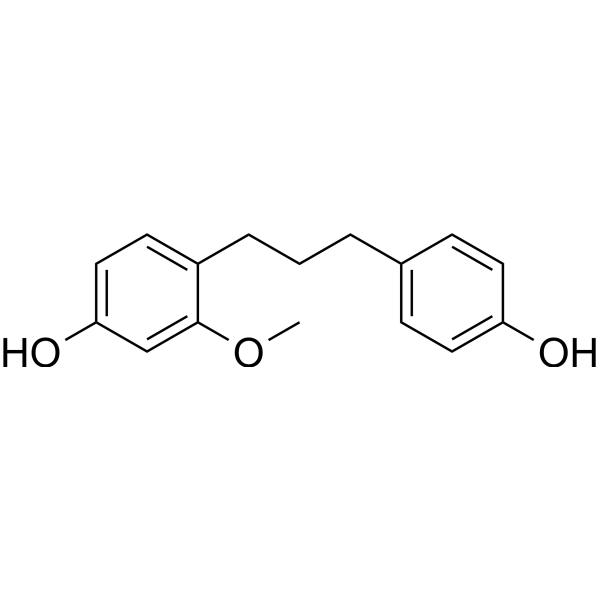
Broussonin B
CAS No. 73731-86-9
Broussonin B( —— )
Catalog No. M31116 CAS No. 73731-86-9
Broussonins A and B, new phytoalexins from diseased paper mulberry.
Purity : >98% (HPLC)
 COA
Datasheet
HNMR
HPLC
MSDS
Handing Instructions
COA
Datasheet
HNMR
HPLC
MSDS
Handing Instructions
| Size | Price / USD | Stock | Quantity |
| 5MG | 468 | In Stock |


|
| 50MG | Get Quote | In Stock |
|
| 100MG | Get Quote | In Stock |
|
Biological Information
-
Product NameBroussonin B
-
NoteResearch use only, not for human use.
-
Brief DescriptionBroussonins A and B, new phytoalexins from diseased paper mulberry.
-
DescriptionBroussonins A and B, new phytoalexins from diseased paper mulberry. Broussonin B can induce neurite outgrowth in PC-12 cells at concentration of 50 microg/ml, and show moderate inhibitory activities against a chymotrypsin-like activity of the proteasome.Broussonin B also can significantly inhibit adipocyte differentiation in 3T3-L1 cells as measured fat accumulation using Oil Red O assay.
-
In Vitro——
-
In Vivo——
-
Synonyms——
-
PathwayOthers
-
TargetOther Targets
-
Recptor——
-
Research Area——
-
Indication——
Chemical Information
-
CAS Number73731-86-9
-
Formula Weight258.32
-
Molecular FormulaC16H18O3
-
Purity>98% (HPLC)
-
Solubility——
-
SMILES——
-
Chemical Name——
Shipping & Storage Information
-
Storage(-20℃)
-
ShippingWith Ice Pack
-
Stability≥ 2 years
Reference
molnova catalog



related products
-
ACTH (1-14) TFA (256...
ACTH (1-14) (TFA) is a polypeptide of corticotrophin, which promotes the release of cortisol.
-
Halopemide
Halopemide is a potent inhibitor of PLD (IC50 = 220 and 310 nM for human PLD1 and PLD2). Halopemid is an antagonist of dopamine receptors. Halopemid can be used in psychotropic research.
-
Vindesine sulfate
Vindesine sulfate is a vinca alkaloid which is a synthetic derivative of vinblastine, binds to the microtubular proteins of the mitotic spindle, leading to crystallization of the microtubule and mitotic arrest or cell death.
